
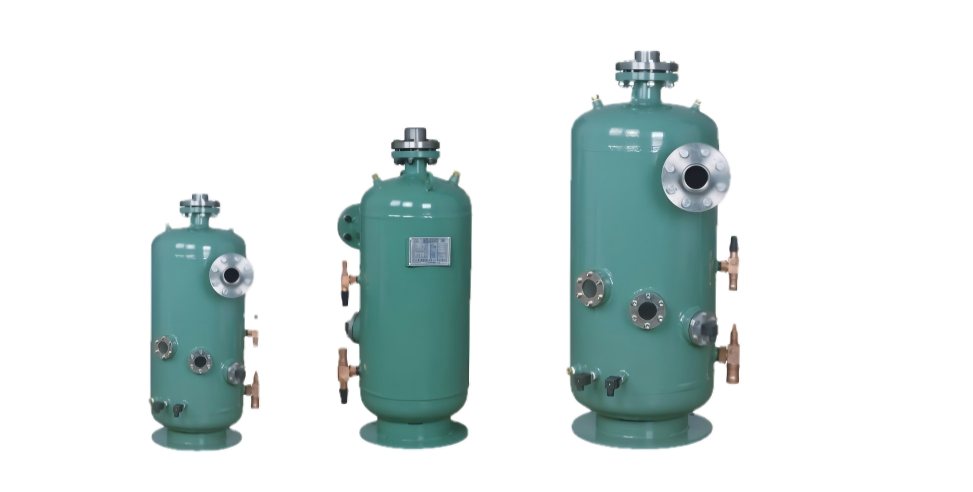
OIL SEPARATOR - For Screw Units, Oil Return to Compressor
The oil separator uses centrifugal and collision separation to remove oil from discharge gas and return it to the crankcase for reliable lubrication.
Match compressor displacement, connection size and system pressure; Kilterra covers multiple styles for scroll and piston compressors.
As a key protective component for compressors, Kilterra refrigeration oil separators pass strict leak tests for reliable quality.
Kilterra oil separators cover multiple connection and mounting styles, compatible with scroll and piston compressors, available for bulk supply.
Six core advantages that keep your refrigeration system protected around the clock
Centrifugal plus filtration separation achieves over 99% efficiency so discharge gas is virtually oil-free.
Separated oil flows back to the crankcase through the oil-return line, maintaining lubrication and reducing top-ups.
A high-strength steel shell handles high screw-compressor discharge pressure safely.
Keeps oil out of condenser and evaporator to preserve heat-transfer efficiency and cut running cost.
Multiple connection sizes and types fit different screw-compressor brands, easy to install.
37 years of experience, strict quality control and ISO9001 certification for stable long-term running.
Detailed parameters for a precise match to your application
| Model | Connection Size | Compressor Type | Separation Efficiency | Shell Material | Mounting |
|---|---|---|---|---|---|
| OVS-084S | 1/2" | 10-30HP screw units | >99% | Steel | Discharge line |
| OVS-138S | 3/4" | 30-50HP screw units | >99% | Steel | Discharge line |
| OVS-158S | 7/8" | 50-80HP screw units | >99% | Steel | Discharge line |
| OVS-218S | 1-1/8" | 80-120HP screw units | >99% | Steel | Discharge line |
| OVS-258S | 1-5/8" | 120-200HP screw units | >99% | Steel | Discharge line |
| OVS-318S | 2-1/8" | 200-300HP screw units | >99% | Steel | Discharge line |
Widely deployed across commercial and industrial refrigeration
Discharge-line oil separation for screw chillers and air-source screw heat pumps.
Oil separation protection for screw units in large cold/freezer rooms.
Screw systems in chemical, food and pharmaceutical plants.
Oil separation for shipboard screw units, tolerant of vibration.
Kilterra delivers professional refrigeration component solutions with OEM/ODM support.
For screw compressor systems, oil separator sizing hinges on discharge volume flow rather than nominal tonnage, since pressure drop across the element directly affects oil carryover. Kilterra OVS units are rated for R134a, R404A, R507 and R407C duty, with connection sizes from 1/2" to 4" and shell pressures up to 4.5 MPa, so OEMs can match a separator to a specific rack without oversizing the vessel. Each unit is helium leak-tested and shipped with documentation for export markets including Europe, the Middle East and Southeast Asia.
When specifying an oil separator for a screw compressor, start with discharge line size and full-load mass flow, then confirm the vessel handles turndown without excessive pressure drop or oil carryover. Oversized units lose velocity and separation efficiency; undersized ones choke flow and raise discharge temperature. For ammonia, CO2 and HFC systems, verify shell material, weld quality and leak-test records, since oil separator performance directly affects compressor bearing life and oil return stability. Kilterra supplies OVS oil separators with >99% separation efficiency, auto oil return and steel pressure shells, backed by bulk export experience to refrigeration wholesalers and OEM screw-unit builders.
Selecting an oil separator for screw compressor systems starts with discharge line velocity, not just connection size. Oversized units drop velocity and lose centrifugal separation; undersized ones add pressure drop that hurts capacity. Kilterra OVS separators combine centrifugal and impingement stages to hold oil carryover below 1%, with welded steel shells tested for R404A, R507 and R134a duty. They suit screw chillers, industrial racks and ammonia/CO2 booster systems. Export packing and documentation support OEM and distributor orders.
Selecting an oil separator for a screw compressor package starts with discharge line flow rate at full load, not just connection size. Oversizing drops gas velocity below the threshold needed for effective centrifugal and impaction separation, while undersizing raises pressure drop and can push oil carryover above the 5 ppm level many OEMs specify. Kilterra OVS separators are tested for leak-tightness and rated for R134a, R404A, R507, R407C, and R22 duty, with welded steel shells and return-line orifices matched to compressor displacement. For export orders, we supply bulk quantities with connection sizes and mounting configurations confirmed against your drawing before production.
Selecting an oil separator for screw compressor packages starts with discharge line velocity, not just connection size. Too low a velocity lets oil pool in the shell; too high a velocity drags oil past the element and into the condenser. Kilterra sizes OVS housings against compressor displacement, refrigerant type and expected turndown, so part-load operation still returns oil to the crankcase. Each unit is helium leak-tested and shipped with documentation for OEMs and contractors exporting to North America, the Middle East and Southeast Asia.
Selecting an oil separator for screw compressor systems requires matching the separator's flow capacity to the compressor's discharge volume, not just the connection size. An undersized oil separator causes excessive oil carryover into the condenser and expansion valve, reducing heat exchange efficiency and risking compressor starvation. Kilterra's OVS series oil separators are engineered for ammonia and HFC refrigerant systems, with welded steel housings tested to 1.5x design pressure and oil return orifice sizing optimized for partial and full load conditions. With over a decade of export experience to Europe, Southeast Asia, and the Middle East, Kilterra supports OEM and aftermarket orders with stable lead times and refrigerant-compatible gasket options.
Specify an oil separator by system pressure rating, discharge connection size and compressor displacement rather than by canister volume alone. For screw packages, size the vessel so gas velocity stays within the separator's rated flow at full load, since oversizing reduces centrifugal efficiency and undersizing raises oil carry-over. Confirm the shell meets the applicable pressure directive, the oil return line matches the compressor's orifice, and the element is serviceable in place. Kilterra supplies OVS units to OEMs and distributors worldwide, with documented pressure testing and export packing for bulk orders.
Correct oil separator sizing starts with discharge gas volume flow at full load, not just connection diameter. Undersizing raises velocity and oil carryover; oversizing weakens centrifugal separation. Kilterra OVS units are matched to screw compressor displacement, refrigerant type and operating pressure, with welded steel shells pressure-tested for leak-free export supply.