
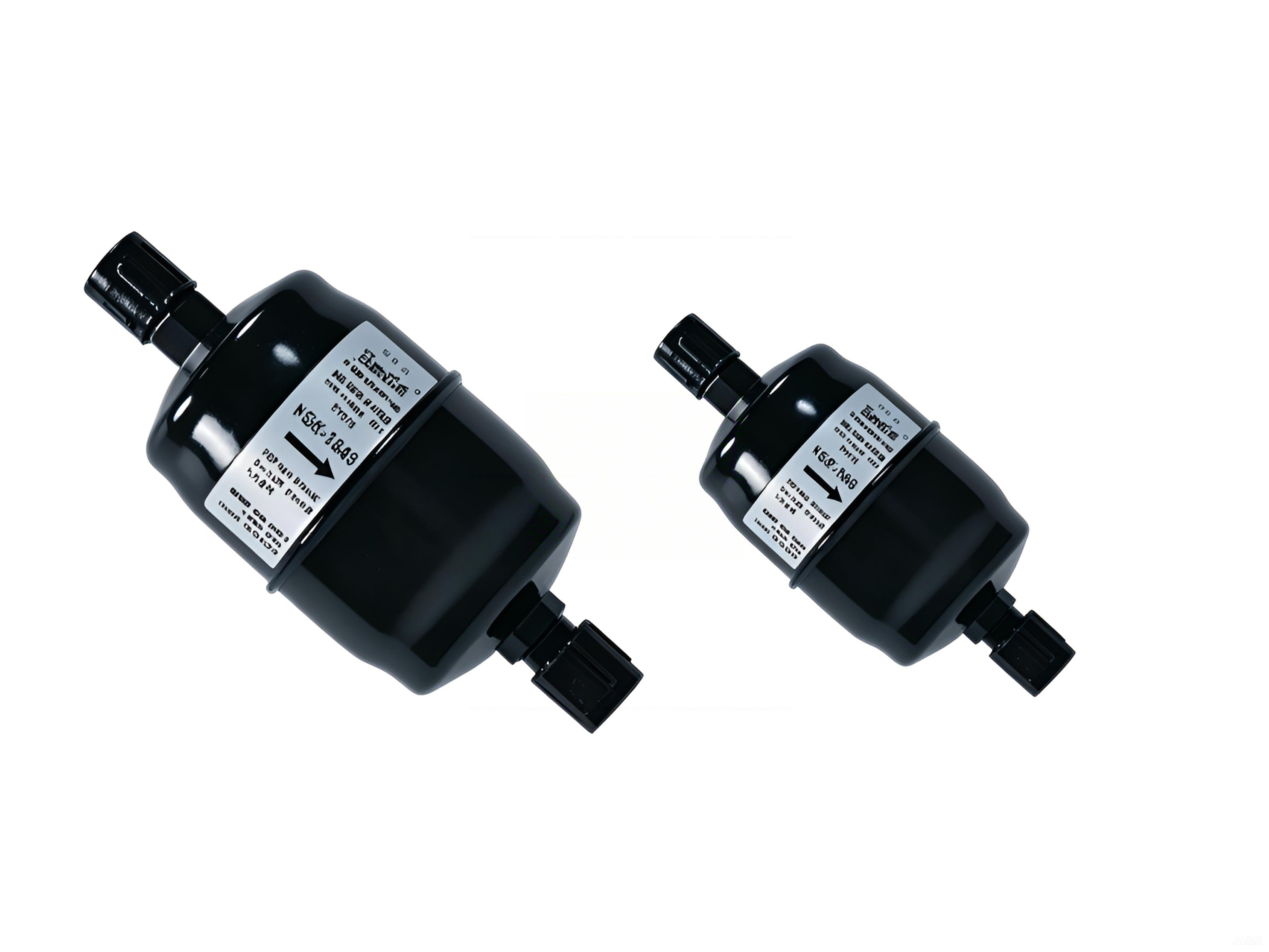
The filter drier is the goalkeeper of a refrigeration system. It intercepts moisture, contaminants and acid in the refrigerant line before they reach precision parts such as the compressor. Kilterra KLD/KLE liquid-line filter driers combine high-efficiency molecular sieve with activated alumina for one-step drying and filtration, widely used in commercial air conditioning, chillers and ice makers.
Before You Start
- Install on the liquid line between condenser and expansion valve, direction per arrow mark
- Cool the shell during brazing to protect the desiccant from heat damage
- Close both valves before replacing a replaceable-core drier
- Never reverse inlet/outlet, or the desiccant saturates prematurely
Common Installation Mistakes
- Large inlet-outlet temperature difference, condensation or frost - blocked filter element
- Bubbles in sight glass, repeated ice blockage - saturated desiccant, excess moisture
- Compressor short-cycling on high pressure - blockage causing abnormal high pressure
- Oil weeping at joints - seal incompatibility with refrigerant/lubricant
Notes from the Field
- How often should a filter drier be replaced? - Every 2-3 years normally; immediately after major repair or moisture ingress.
- How do I know the drier is blocked? - Feel the inlet/outlet temperature difference: hot in, cold out means blockage.
- Can an R22 drier be used in an R32 system? - No, pressure rating and desiccant formula differ.
- What does discolored desiccant mean? - Moisture saturation, water content exceeded - replace now.
For 37 years Kilterra has focused on one thing: build refrigeration components right, deliver them on time. Filter Drier supports OEM/ODM customization - factory visits, sample testing and volume partnerships are welcome.